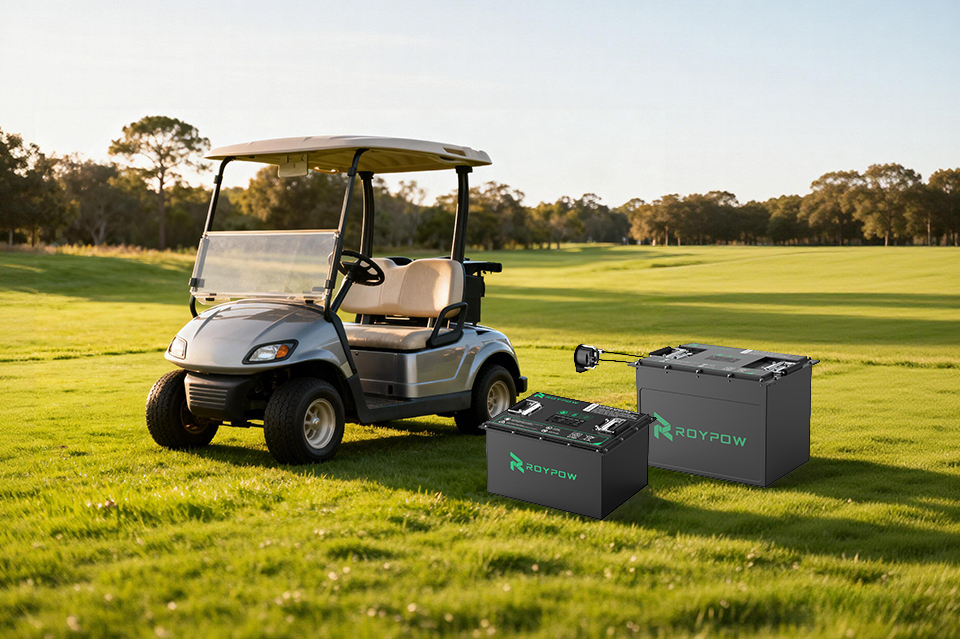
Quick Buying Answer for Golf Cart Batteries

The right golf cart battery is the one that matches your cart voltage, driving range, charger, safety expectations, service environment, and budget over the full life of the vehicle. For most modern golf carts used in resorts, communities, campuses, logistics parks, golf courses, and light utility fleets, LiFePO4 lithium batteries are becoming the preferred choice because they reduce maintenance, charge faster, deliver stable power, and usually provide stronger long-term return on investment than flooded lead-acid or AGM alternatives.
If you want the shortest practical answer, follow this order: confirm whether your cart is 36V, 48V, or 72V; estimate daily mileage and payload; choose a battery capacity in amp-hours that gives a safety margin; match the charger to both voltage and chemistry; verify safety certifications; and compare warranty, service response, and total cost of ownership instead of only upfront price. A single private cart used on weekends may not need the same battery as a fleet vehicle moving guests in Dubai, maintaining a resort in Bali, serving a retirement community in Florida, or transporting staff around a logistics hub near Rotterdam.
For buyers replacing lead-acid batteries, a drop-in LiFePO4 solution can be attractive when it is engineered with a proper battery management system, correct mounting, communication compatibility, and charger support. ROYPOW, for example, focuses exclusively on lithium battery systems and offers Golf Cart Batteries for 36V, 48V, and 72V applications, along with matching chargers and support services for global customers.
Before purchasing, avoid three common mistakes. First, do not assume that all batteries with the same voltage perform the same; usable energy, discharge rate, BMS protection, thermal behavior, and cycle life vary widely. Second, do not reuse an old charger unless it is confirmed compatible with the new battery chemistry. Third, do not judge value by purchase price alone. A battery that costs less at the beginning may require watering, cleaning, replacement, downtime, and higher labor expense, while a higher-quality lithium system can save money over several seasons.
| Buyer Situation | Most Important Check | Recommended Direction | Reason |
|---|---|---|---|
| Private golf cart for weekend use | Voltage and range | Moderate-capacity LiFePO4 or AGM | Lower daily demand, but convenience and low maintenance still matter |
| Golf course fleet | Cycle life, charging time, support | LiFePO4 with fleet monitoring and warranty support | High utilization makes downtime expensive |
| Resort or hotel people mover | Safety, quiet operation, long daily runtime | LiFePO4 with certified charger | Guest-facing operations require reliability and clean operation |
| Industrial site utility cart | Payload, discharge power, rugged design | High-quality lithium system with robust BMS | Stop-start work and heavier loads stress batteries |
| Hot climate operation | Thermal protection and service network | Battery with tested temperature management | Heat can accelerate battery aging if unmanaged |
| Fleet manager replacing lead-acid | Total cost of ownership | LiFePO4 conversion with charger review | Labor, water, cleaning, and replacements affect ROI |
This table shows why the “best” golf cart battery is application-specific. The global world market includes private owners, rental fleets, port facilities, universities, airports, industrial parks, tourist destinations, and municipal service teams. Each user group should begin with the same technical checks, then adjust capacity, support level, and investment target according to daily usage.

Identify Your Cart’s Voltage System: 36V, 48V, or 72V

Voltage is the first technical checkpoint because your motor controller, charger, wiring, and accessories are designed around a specific system voltage. Common golf cart platforms use 36V, 48V, or 72V battery systems. A mismatch can cause poor performance, controller faults, charger failure, or safety risks. You can usually identify voltage by checking the owner’s manual, reading the controller label, reviewing the existing battery arrangement, or asking the cart manufacturer or dealer.
A traditional 36V cart often uses six 6V lead-acid batteries in series. A 48V cart may use six 8V batteries, four 12V batteries, or a lithium pack designed for the same system voltage. A 72V cart is typically used where more power, acceleration, hill-climbing ability, or load capacity is needed. In regions with hilly golf courses, large resorts, or utility transport routes, 72V platforms are gaining attention because higher voltage can reduce current for the same power demand, improving efficiency when properly engineered.
For owners seeking lithium replacements, ROYPOW provides dedicated options such as 36V Golf Cart Batteries, 48V Golf Cart Batteries, and 72V Golf Cart Batteries. The advantage of choosing a purpose-built system is that voltage, BMS protection, capacity, and charger compatibility are considered together rather than treated as separate purchases.
In global markets, voltage preferences can differ by application and vehicle brand. In North America, 48V carts are widely used in golf communities and commercial facilities. In the Caribbean and Southeast Asia, resort carts often need strong daily range because vehicles transport guests across large beachfront properties. In Europe, compact utility carts in resorts, vineyards, campuses, and urban service areas may prioritize efficient charging and compliance documentation. In the Middle East, high ambient temperatures and long paved routes place more emphasis on thermal management and after-sales support.
| Voltage System | Typical Legacy Battery Layout | Common Use Case | Buying Focus | Potential Advantage |
|---|---|---|---|---|
| 36V | Six 6V batteries in series | Older golf carts, light neighborhood use | Confirm controller compatibility | Simple replacement path for many legacy carts |
| 48V | Six 8V or four 12V batteries | Golf courses, communities, resorts | Balance range, cost, and power | Common standard with broad support |
| 72V | Multiple batteries or integrated lithium pack | Performance carts and utility vehicles | Power delivery and charger match | Higher efficiency potential under load |
| Mixed accessory systems | Battery pack plus DC converter | Carts with lights, audio, GPS, fans | Check accessory voltage needs | Stable accessory operation |
| Fleet conversion systems | Lead-acid bank replaced by lithium pack | Course and resort fleets | Installation, monitoring, service | Lower maintenance and faster charging |
| High-duty utility systems | Large pack or high-voltage platform | Industrial sites, ports, campuses | Payload and discharge capability | Improved torque and runtime consistency |
The table highlights that voltage is more than a number on a label. It affects cable current, charger selection, controller behavior, accessory design, and performance. If you are unsure, take clear photos of the existing battery compartment, controller label, charger label, and vehicle data plate before speaking with a supplier. This simple preparation helps prevent wrong orders and installation delays, especially for buyers sourcing batteries across borders through trade hubs such as Singapore, Los Angeles, Hamburg, Jebel Ali, Durban, or Shanghai.
Battery Types Explained: Flooded Lead-Acid, AGM, and LiFePO4

Golf cart batteries are commonly grouped into three categories: flooded lead-acid, AGM, and LiFePO4. Each type can move a cart, but their maintenance needs, usable capacity, weight, charging behavior, service life, and operating cost are different. Understanding these differences helps buyers avoid choosing only by price.
Flooded lead-acid batteries are the traditional option. They are widely available and familiar to many technicians. Their main advantage is lower upfront cost, but they require regular watering, terminal cleaning, equalization routines, and careful ventilation. They are heavy, their voltage drops noticeably under load, and deep discharging can shorten life. In fleet environments, maintenance labor is often the hidden cost that makes flooded batteries less economical over time.
AGM batteries are sealed lead-acid batteries using absorbed glass mat technology. They reduce watering requirements and are cleaner than flooded batteries, making them useful for owners who want a sealed format but are not ready to move to lithium. However, AGM batteries still carry much of the weight and cycle-life limitation of lead-acid chemistry. They also require correct charging profiles and may be less forgiving if repeatedly deeply discharged.
LiFePO4, or lithium iron phosphate, is now a leading chemistry for golf carts because it offers high cycle life, stable voltage, lower weight, fast charging, and minimal routine maintenance. Compared with older lead-acid packs, a LiFePO4 system can reduce vehicle weight significantly, improving efficiency and sometimes acceleration. It also delivers more consistent power throughout the discharge cycle, so the cart does not feel strong at the beginning of the day and weak by the afternoon.
Safety depends on design quality, not chemistry alone. A good LiFePO4 golf cart battery should include a battery management system that protects against overcharge, over-discharge, over-current, short circuit, and abnormal temperature. It should also be built with mechanical protection, quality cells, validated pack design, and a charger matched to the chemistry. This is where supplier experience matters. ROYPOW’s technological capabilities include in-house BMS design, battery pack design, system design, inverter-related development, charger testing, and software development, helping its lithium systems perform as integrated solutions rather than loose collections of components.
| Battery Type | Maintenance | Weight | Charging | Typical Strength | Typical Limitation |
|---|---|---|---|---|---|
| Flooded lead-acid | High: watering, cleaning, inspection | Heavy | Slower, requires correct equalization | Low initial purchase cost | Maintenance and shorter cycle life |
| AGM | Lower than flooded | Heavy to medium | Needs AGM profile | Sealed design and less mess | Still limited by lead-acid characteristics |
| LiFePO4 | Very low routine maintenance | Light | Fast when matched with correct charger | Long life and stable power | Higher upfront investment |
| Low-cost lithium without strong BMS | Uncertain | Light | Risky if charger is not matched | Attractive price | Potential safety and support concerns |
| Integrated lithium system | Low | Light | Designed with compatible charger | Reliable performance and easier support | Requires proper model selection |
| Fleet lithium solution | Low plus periodic diagnostics | Light | Opportunity charging possible | Reduced downtime and labor | Needs planning for rollout and training |
This comparison shows why LiFePO4 has become a major trend in the global world market. Buyers are not only purchasing stored energy; they are purchasing operating uptime. Golf courses in Scotland, resorts in Phuket, gated communities in California, universities in Australia, and industrial parks in Mexico all face different conditions, but they share a common need: vehicles must be ready when users need them.
How to Calculate the Right Capacity in Ah for Your Usage
Capacity is usually expressed in amp-hours, or Ah, but buyers should also think in watt-hours, or Wh, because watt-hours combine voltage and capacity. The formula is simple: volts multiplied by amp-hours equals watt-hours. A 48V 100Ah battery stores about 4,800Wh of nominal energy. A 72V 100Ah battery stores about 7,200Wh. However, usable energy depends on battery chemistry, BMS limits, discharge rate, temperature, vehicle efficiency, terrain, tire pressure, payload, and driving style.
To estimate the right capacity, start with daily distance and duty cycle. A cart used for nine holes on flat terrain may require far less energy than a utility cart pulling maintenance equipment over hills. If the vehicle carries four passengers, runs lights, fans, GPS screens, coolers, sprayers, or radios, include extra margin. For commercial use, add reserve capacity because unexpected trips happen. A practical planning margin is often 20% to 30% above normal daily demand.
For example, a 48V cart serving a residential community may travel 15 to 25 kilometers per day with moderate stops. A 48V lithium pack in the 100Ah range may be sufficient depending on vehicle efficiency and terrain. A resort shuttle running all day in Cancun or the Maldives may need higher capacity, multiple opportunity charging periods, or a larger fleet rotation plan. A maintenance cart in a hilly course near Cape Town may need stronger discharge capability and more reserve than a cart on a flat course in the Netherlands.
Capacity planning should also account for depth of discharge. Lead-acid batteries generally last longer when not deeply discharged, so their practical usable capacity may be much lower than the label suggests. LiFePO4 batteries can typically use a larger percentage of their rated capacity while maintaining longer life, which is one reason a lithium pack with a lower Ah number may still outperform a larger lead-acid bank in real operation.
| Usage Pattern | Typical Daily Demand | Capacity Planning Approach | Recommended Safety Margin |
|---|---|---|---|
| Occasional private driving | Short trips, low payload | Match voltage and choose moderate Ah | 15% to 20% |
| Golf course rental fleet | Multiple rounds and frequent charging | Prioritize cycle life and fast charging | 20% to 30% |
| Resort passenger transport | Long operating hours and guest schedules | Choose larger capacity or plan opportunity charging | 25% to 35% |
| Maintenance utility cart | Tools, cargo, hills, stop-start driving | Check discharge current and usable energy | 30% or more |
| Campus or airport support cart | Predictable routes but high uptime needs | Use fleet data to size packs | 20% to 30% |
| Hot or cold climate operation | Energy loss from temperature stress | Allow extra capacity and verify temperature range | 25% to 40% |
This table is a starting point, not a substitute for real data. Fleet managers should record mileage, charging time, passenger count, load weight, route slope, and end-of-day state of charge for at least one representative week. If vehicles operate in several locations, compare sites separately. A course near Toronto has different seasonal conditions from a resort in Abu Dhabi, and a vineyard cart in Bordeaux has different terrain from a logistics cart near the Port of Singapore.
One useful calculation is energy per kilometer. If a cart uses 150Wh per kilometer and must travel 30 kilometers, it needs about 4,500Wh of usable energy. Add a 25% margin and the target becomes about 5,625Wh. For a 48V system, that suggests roughly 117Ah nominal capacity if most of the energy is usable. Because real-world conditions vary, consult a supplier with application experience before finalizing the purchase.
Charger Compatibility: Matching Voltage and Chemistry
A charger is not just an accessory; it is part of the battery system. The charger must match battery voltage, chemistry, charging profile, current limits, connector style, communication requirements, and regional electrical input. Using the wrong charger can lead to incomplete charging, reduced battery life, BMS shutdown, overheating, or unsafe conditions. This is especially important when converting from lead-acid to lithium.
Lead-acid chargers often use multi-stage profiles designed around lead-acid voltage behavior. Lithium batteries, including LiFePO4, need a different charging logic. Some lithium systems communicate with the charger through CAN or other control methods, while others use a defined constant-current and constant-voltage profile. The safest path is to use a charger recommended by the battery manufacturer. ROYPOW offers a compatible Golf Cart Battery Charger designed to work with its golf cart battery systems, simplifying selection and reducing compatibility risk.
Charging current also matters. Higher charging current can reduce downtime, but only if the battery, BMS, charger, wiring, connector, and electrical supply are designed for it. A fleet charging room in a golf club outside London may have different power availability from a maintenance shed in rural New Zealand or a resort island running on a microgrid. In some regions, voltage fluctuation, humidity, salt air, and dust require extra attention to charger placement and protection.
For commercial fleets, charger strategy affects operations. Overnight charging may work for private owners, but high-use fleets often benefit from opportunity charging between shifts, during lunch breaks, or while carts are staged. Lithium batteries are well suited to this pattern because they do not require the same full-cycle routines as lead-acid batteries. However, charging procedures should still be documented, and staff should be trained to inspect connectors, avoid cable damage, and keep charging areas clean and ventilated.
When buying internationally, confirm plug type, input voltage, frequency, certification, spare parts, and local support. A charger supplied for North America may not be ready for Europe, Australia, South Africa, Japan, or the Middle East without correct configuration. Buyers near ports and trade hubs such as Long Beach, Antwerp, Busan, Santos, and Jebel Ali should also check customs documentation and after-sales channels before placing large orders.
Certifications and Safety Standards to Look For
Battery safety is a combination of cell quality, pack design, BMS logic, manufacturing control, testing, certification, installation, and user behavior. Certifications do not guarantee perfect performance in every situation, but they provide evidence that products have been evaluated against recognized standards. For global buyers, certification is especially important because carts may be used in public spaces, hospitality settings, golf clubs, industrial facilities, or regulated commercial environments.
Look for compliance with relevant international or regional standards such as IEC, ISO, UL-related requirements, transportation testing, and quality management systems. The exact standard depends on product type, destination market, and application. Fleet buyers should request documentation from suppliers and confirm whether certificates apply to the exact battery model, charger model, and production version being purchased.
Safety features to prioritize include overcharge protection, over-discharge protection, short-circuit protection, over-current protection, cell balancing, temperature monitoring, robust enclosure design, vibration resistance, and clear labeling. For LiFePO4 batteries, the BMS is central. It should not only shut the battery down in abnormal conditions but also help maintain long-term balance and predictable behavior.
Manufacturing capability is another safety factor. ROYPOW operates large-scale production facilities supported by automated production lines, MES systems, quality processes, and IATF16949 quality certification. Its testing capabilities include battery cell testing, battery system testing, BMS testing, charger testing, and energy storage testing with high-precision instruments. For buyers, this matters because consistent production and validation reduce the risk of variation from one batch to another.
Installation safety should not be ignored. Even a well-certified battery can be compromised by loose cables, incorrect torque, damaged connectors, poor ventilation around chargers, incorrect fuse sizing, or improvised mounting. Professional installation is recommended for fleets and for any conversion involving controller communication, accessory wiring, or charger replacement. Keep records of installation, serial numbers, service dates, and warranty terms.
| Safety Item | What to Ask | Why It Matters | Buyer Action |
|---|---|---|---|
| Certification documents | Which standards apply to this exact model? | Prevents confusion between similar products | Request current certificates and model numbers |
| BMS protection | What protections are built in? | Controls abnormal voltage, current, and temperature | Review datasheet and protection limits |
| Charger approval | Is this charger recommended for the battery? | Charging mismatch can shorten life or create risk | Use manufacturer-approved chargers |
| Mechanical design | How is the pack mounted and protected? | Golf carts face vibration and impact | Check brackets, enclosure, and cable routing |
| Quality system | What production controls are used? | Consistent manufacturing supports reliability | Evaluate factory capability and testing process |
| Transport compliance | Can it be shipped legally to my country? | Lithium batteries require correct logistics handling | Confirm shipping documents before ordering |
The explanation behind this table is simple: safety is not one certificate or one claim. It is a chain. If one link is weak, the entire ownership experience suffers. Serious buyers should treat documentation, charger matching, installation quality, and service support as part of the product.
Warranty, Support, and After-Sales Service Evaluation
A battery warranty is valuable only when it is understandable, realistic, and supported by a responsive service organization. Read the warranty carefully. Check the warranty period, capacity retention terms, exclusions, labor coverage, shipping responsibility, required maintenance records, installation conditions, and claim process. A long warranty with unclear terms may be less useful than a shorter warranty backed by strong regional support.
For private buyers, support may mean simple access to troubleshooting help and replacement parts. For fleet managers, support includes pre-sale sizing, installation guidance, staff training, diagnostics, charger planning, warranty processing, and fast problem resolution. If a fleet of 80 carts at a resort in Hawaii or a golf club near Barcelona has charging problems before a busy weekend, response time matters as much as product specification.
Service capability is a major part of ROYPOW’s value proposition. The company serves global customers through subsidiaries, dealer networks, and regional support teams in markets including North America, Europe, South America, Africa, the Middle East, and Asia-Pacific. Its service commitment emphasizes quick response and fast resolution, supported by technical teams familiar with lithium motive power systems. For international customers, this kind of structure can reduce risk compared with buying anonymous batteries from a supplier with no local channel.
When evaluating local suppliers, ask whether they stock chargers, cables, display units, BMS tools, and replacement components. Ask whether technicians have experience with your cart brand. Ask how warranty claims are handled if the battery was purchased online but installed locally. Also ask whether the supplier can provide batch traceability, installation manuals, and remote support. In many global markets, the dealer’s competence is just as important as the manufacturer’s name.
Local supply considerations vary by region. In the United States, buyers may compare suppliers serving Florida golf communities, Arizona resorts, and California campuses. In Europe, logistics through Rotterdam, Hamburg, or Antwerp can influence delivery timing. In Asia, Singapore, Shenzhen, Busan, and Yokohama are important trade and service nodes. In Africa and the Middle East, regional support near Durban, Dubai, Riyadh, and Johannesburg can make after-sales service more predictable. In Latin America, access through Santos, Panama, and major inland distributors can affect lead times.
Upfront Cost vs Long-Term ROI: A Fleet Manager’s View
Fleet managers should evaluate golf cart batteries using total cost of ownership rather than purchase price alone. A battery affects labor, downtime, charging infrastructure, replacement intervals, vehicle performance, customer satisfaction, and resale value. The cheapest battery on day one may become the most expensive battery by year three if it causes service interruptions or frequent replacement.
Lead-acid batteries may appear economical because the initial price is lower. However, they require watering, cleaning corrosion, checking electrolyte levels, equalization, ventilation management, and more frequent replacement. They are heavy, which can increase energy consumption and tire wear. Their performance declines during discharge, which may frustrate users and reduce route predictability. In a fleet, the labor spent maintaining dozens or hundreds of batteries becomes a major cost.
LiFePO4 batteries usually require higher upfront investment, but they can reduce maintenance labor, improve energy efficiency, charge faster, and last longer. They also help standardize vehicle performance throughout the day. For golf courses and resorts, this may translate into fewer spare vehicles, fewer customer complaints, and smoother scheduling. For industrial users, it can mean less downtime and more predictable shift planning.
Consider a simplified case study. A 40-cart golf course near Orlando operates carts daily during peak season. With flooded lead-acid batteries, staff spend time watering, cleaning, and rotating vehicles. Some carts return weak after heavy use, requiring backup units. When the course converts to LiFePO4, maintenance routines shrink, charging windows become more flexible, and the carts deliver more consistent speed. The purchase price is higher, but savings arise from reduced labor, fewer replacements, lower downtime, and improved user experience.
Another case could involve a resort in Phuket using carts for guest transport between villas, beaches, restaurants, and service areas. Guest-facing carts must be quiet, clean, and available. Battery failure affects hospitality ratings, not just repair cost. A lithium solution with correct charging and local service support may justify itself through reliability and guest satisfaction, even before calculating direct maintenance savings.
For a fleet manager, ROI analysis should include battery cost, charger cost, installation, training, energy consumption, maintenance labor, expected cycle life, replacement schedule, downtime cost, warranty support, and disposal or recycling requirements. Sustainability reporting is also becoming more important. Hotels, golf clubs, universities, and corporations increasingly measure carbon reduction and environmental responsibility. Moving from fossil-fuel support equipment and high-maintenance lead-acid systems toward efficient electrified fleets supports broader environmental goals.
| Cost Factor | Lead-Acid Impact | LiFePO4 Impact | ROI Question |
|---|---|---|---|
| Initial purchase | Lower | Higher | How long will the fleet operate before replacement? |
| Maintenance labor | Watering and cleaning required | Minimal routine maintenance | What is the labor cost per cart per year? |
| Downtime | More likely as batteries age | Reduced with quality system | What does one unavailable cart cost? |
| Charging time | Often slower and less flexible | Faster and opportunity charging friendly | Can faster charging reduce fleet size? |
| Performance | Voltage sag under load | Stable power delivery | Does consistent performance improve service quality? |
| Replacement cycle | More frequent in heavy use | Longer cycle life | What is the cost over five to eight years? |
This ROI table should be customized with local numbers. Labor cost in Germany, electricity prices in Japan, shipping costs to island resorts, and technician availability in remote mining towns all change the financial picture. The correct buying decision is the one that fits your local operating reality, not a generic price list.
Looking ahead to 2026, several trends will influence ROI. Battery monitoring will become more common, helping managers track state of charge, health, and charging behavior. Policy pressure for cleaner operations will continue in tourism, municipal services, and corporate campuses. Recycling and second-life planning will become more visible in procurement decisions. Higher-efficiency chargers, smarter BMS software, improved thermal management, and connected fleet dashboards will help fleets use batteries more intelligently. Buyers should therefore choose suppliers that can support future upgrades, not only today’s replacement need.
About Our Company and Lithium Battery Capabilities
ROYPOW TECHNOLOGY is a global company focused on lithium battery systems and energy storage solutions. With more than 20 years of experience in new energy solutions, the company develops and manufactures lithium-ion replacements for lead-acid batteries, including golf cart battery systems, forklift batteries, aerial work platform batteries, floor cleaning machine batteries, trolling motor batteries, and other motive power products. It does not manufacture lead-acid batteries; its specialization is lithium technology.
For golf cart applications, ROYPOW offers 36V, 48V, and 72V LiFePO4 solutions designed for efficient power delivery, extended runtime, and reduced maintenance. The company also provides compatible chargers and related power products, helping customers build complete systems rather than mixing uncertain components. Buyers looking for additional market options can also compare Golf Cart Batteries from specialized battery retailers, but they should always verify voltage, chemistry, charger compatibility, certification, and support.
Technologically, ROYPOW’s in-house capabilities cover BMS design, battery pack design, system integration, industrial design, inverter-related engineering, and software development. These capabilities are important because golf cart batteries must perform under vibration, variable loads, different climates, and frequent charging. A strong BMS helps protect the pack, balance cells, manage abnormal conditions, and support long-term reliability.
Manufacturing strength is also central. ROYPOW has established manufacturing bases in China and Indonesia, supported by a large headquarters, automated production lines, MES systems, quality management, and extensive testing equipment. Its testing center evaluates cells, battery systems, BMS units, chargers, energy storage systems, and related electronics. This vertical integration helps control quality from design to production and supports consistent delivery for global customers.
Service is the third pillar. ROYPOW has subsidiaries and support teams across key regions including the United States, Brazil, the United Kingdom, Germany, the Netherlands, South Africa, Iraq, Australia, Japan, and Korea, together with a broad dealer network. For golf cart owners and fleet managers, this means access to product guidance, technical support, warranty assistance, and after-sales service. In global procurement, such support can be decisive because batteries are long-term operating assets, not disposable accessories.
ROYPOW’s broader mission is to support a cleaner and more convenient lifestyle through energy innovation. In the golf cart sector, that translates into helping users move from high-maintenance lead-acid systems toward efficient lithium power. Whether the buyer is a golf club in St. Andrews, a resort in Dubai, a university campus in Melbourne, a logistics park near Rotterdam, or a retirement community in Florida, the goal is the same: reliable electric mobility with less maintenance and better lifetime value.
FAQ
How do I know whether my golf cart is 36V, 48V, or 72V?
Check the vehicle manual, controller label, charger label, or existing battery configuration. You can also count batteries and multiply by their voltage, but this method is not always reliable after modifications. When uncertain, ask a qualified dealer and provide photos of the battery compartment and data plates.
Can I replace lead-acid batteries with LiFePO4 batteries?
Yes, many carts can be converted from lead-acid to LiFePO4, but the replacement must match system voltage, physical space, controller requirements, cable size, mounting, and charger profile. A purpose-built lithium golf cart battery system is safer and easier than improvising with unrelated components.
Do I need a new charger when switching to lithium?
In most cases, yes. A lead-acid charger may not provide the correct lithium charging profile. Using a manufacturer-recommended charger helps protect battery life and performance. Always match voltage and chemistry before charging.
Is LiFePO4 safer than other lithium chemistries?
LiFePO4 is widely respected for thermal stability and long cycle life, but safety still depends on cell quality, BMS design, enclosure construction, certification, installation, and charger compatibility. Do not buy solely based on chemistry name.
What capacity should I choose for a 48V golf cart?
It depends on daily distance, terrain, passenger weight, accessories, and reserve needs. Many users consider around 100Ah for moderate use, while high-duty fleets may need more. Calculate watt-hours, estimate energy per kilometer, and add a safety margin.
Are lithium golf cart batteries worth the higher price?
For frequent users and fleets, lithium batteries often provide strong long-term value through lower maintenance, faster charging, longer cycle life, reduced weight, and more consistent performance. Occasional private users should compare cost against convenience and expected years of ownership.
What certifications should I ask for?
Ask for certifications and compliance documents relevant to your region and product model, such as IEC, ISO, UL-related documentation, transportation testing, and quality system evidence. Confirm that documents apply to the exact battery and charger you plan to buy.
Can golf cart batteries be used in hot climates?
Yes, but heat affects all batteries. Choose batteries with proper temperature monitoring, BMS protection, tested design, and reliable support. In hot regions such as the Middle East, Southeast Asia, and tropical islands, charger placement and ventilation are also important.
How long do golf cart batteries last?
Service life depends on chemistry, usage, charging habits, temperature, depth of discharge, and product quality. Flooded lead-acid batteries usually have a shorter service life in heavy use, while quality LiFePO4 systems can deliver much longer cycle life when properly used.
Where should global buyers purchase golf cart batteries?
Buy from suppliers that can verify voltage, provide compatible chargers, show safety documentation, support installation, and handle warranty claims. For fleets, choose manufacturers or dealers with regional service coverage, spare parts access, and experience with your cart application.